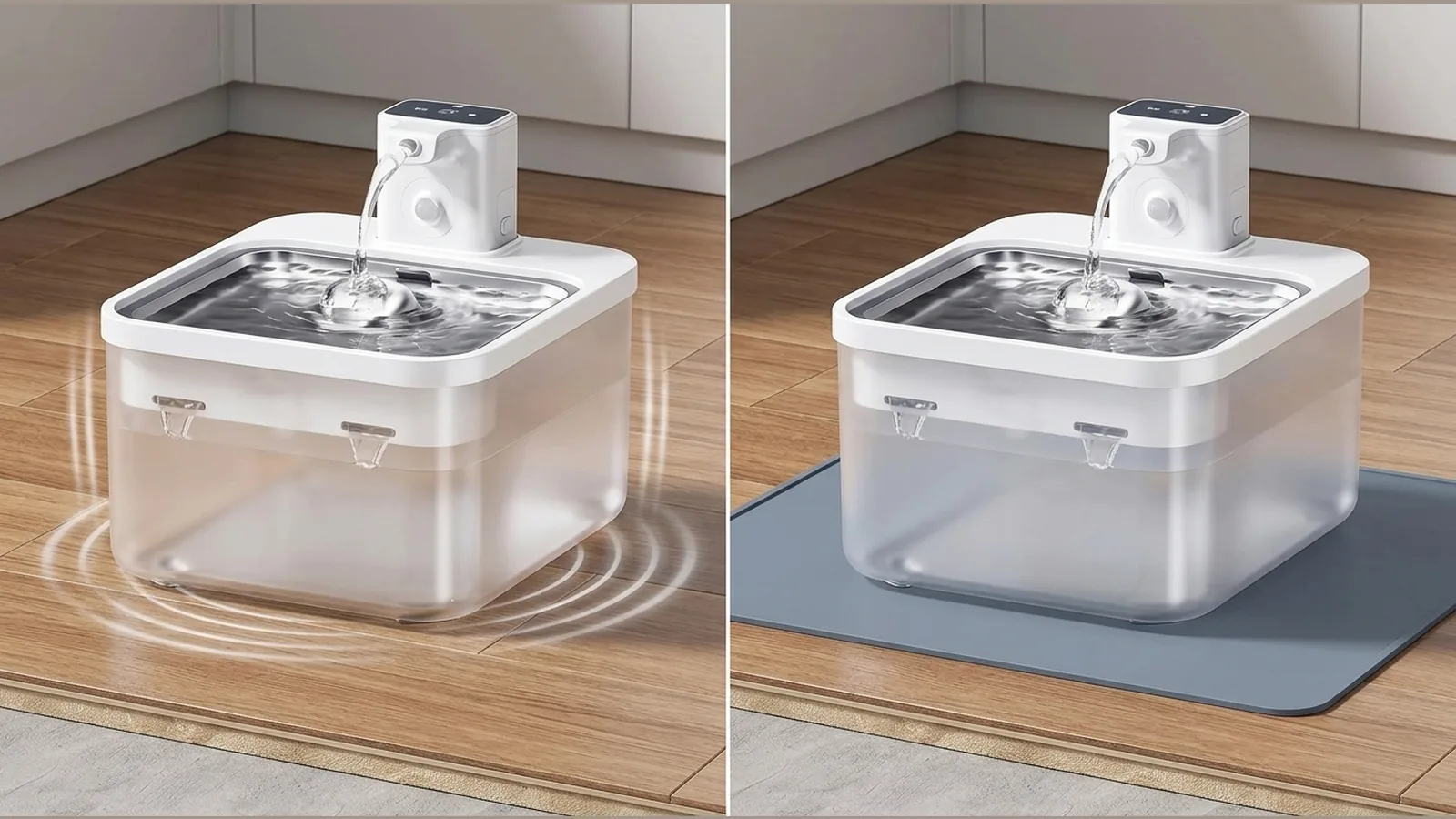
Rubber Mat Under Cat Fountain Vibration: Can It Quiet the Hum?
Direct answer
A rubber mat under cat fountain vibration can help dampen the buzz that transfers into hard floors, cupboards or skirting, but it will not silence a noisy pump on its own. Place a stable, washable mat beneath the unit, keep the fountain level and clean, and treat the mat as one practical step among quieter placement and regular care.
Vibration versus pump noise
Fountain sound often mixes two different problems. Pump hum comes from the motor and water flow inside the unit. Vibration noise is what you hear when that movement travels into a hard surface and turns into a louder rattle or buzz—especially a fountain hum on hard floor tiles, wood or laminate.
A rubber or silicone layer sits between the base and the floor so less vibration is passed on. That can reduce cat fountain vibration noise from the room, yet any harsh mechanical sound from the pump itself will still need cleaning, correct assembly or further checks rather than a mat alone.
Choose a stable washable mat
Pick a cat fountain silicone mat or similar rubber mat that is flat, non-slip and large enough for the whole base. The surface should stay grippy when damp so the fountain does not creep. A washable mat is easier to keep hygienic when water splashes around the rim.
International Cat Care’s carer guide notes using a rubber mat to reduce vibration noise, alongside gradual fountain introduction and regular cleaning and filter checks. Favour a mat thick enough to cushion contact without tipping the unit.
Level surface and spill checks
Set the fountain on a level patch of floor before you rely on the mat. An uneven base can amplify knocking even with padding underneath. After filling, wipe spills from the mat and floor so the unit stays steady and the mat does not slide.
Check that feet or the base sit fully on the mat, not half on hard flooring. Re-seat the mat whenever you move or clean the fountain so contact remains even.
Keep access comfortable
Quiet placement matters as much as padding. International Cat Care recommends quiet, accessible water locations, gradual changes, and contacting a veterinary team when drinking changes are concerning. Cats Protection advises several fresh water sources, kept separate from food and litter, and notes that some cats prefer running water.
Keep the fountain where your cat can reach it without squeezing past busy walkways, and avoid sites that make the hum feel louder—such as against hollow cabinets. Introduce any new fountain setup gradually so drinking stays familiar.
What the mat cannot fix
A mat will not correct a clogged filter, scale build-up, a poorly seated bowl or an ageing pump. Use a condition-based routine: clean when you see film, debris or cloudiness, and check or change filters when flow looks weak or water quality declines, rather than following an unverified fixed calendar.
Do not treat quieter running as proof of better hydration or as a substitute for veterinary advice. If your cat’s drinking pattern changes in a way that worries you, speak to a veterinary team.
Next step
If you are comparing fountain setups for home use, you can review the current product details for our listed cat water fountain. The offer includes a 12-month warranty term; coverage detail beyond that term is not expanded here.
FAQ
Will a rubber mat remove all fountain noise?
No. It mainly limits vibration passed into hard floors. Pump or water-flow sound can remain and may need cleaning, level placement or other checks.
Is a silicone mat better than a thin tea towel?
A dedicated cat fountain silicone mat or rubber mat is usually more stable and washable than a soft cloth, which can bunch, slip or hold moisture unevenly.
Where should I put the fountain once the mat is down?
Choose a quiet, easy-to-reach spot away from food and litter where possible, keep water fresh, and change the setup gradually. Seek veterinary advice if drinking changes are concerning.
How often should I clean the fountain and mat?
Clean both when you notice residue, odour, reduced flow or a dirty filter appearance. Follow a condition-based check rather than an invented fixed interval when the maker’s schedule is not verified.