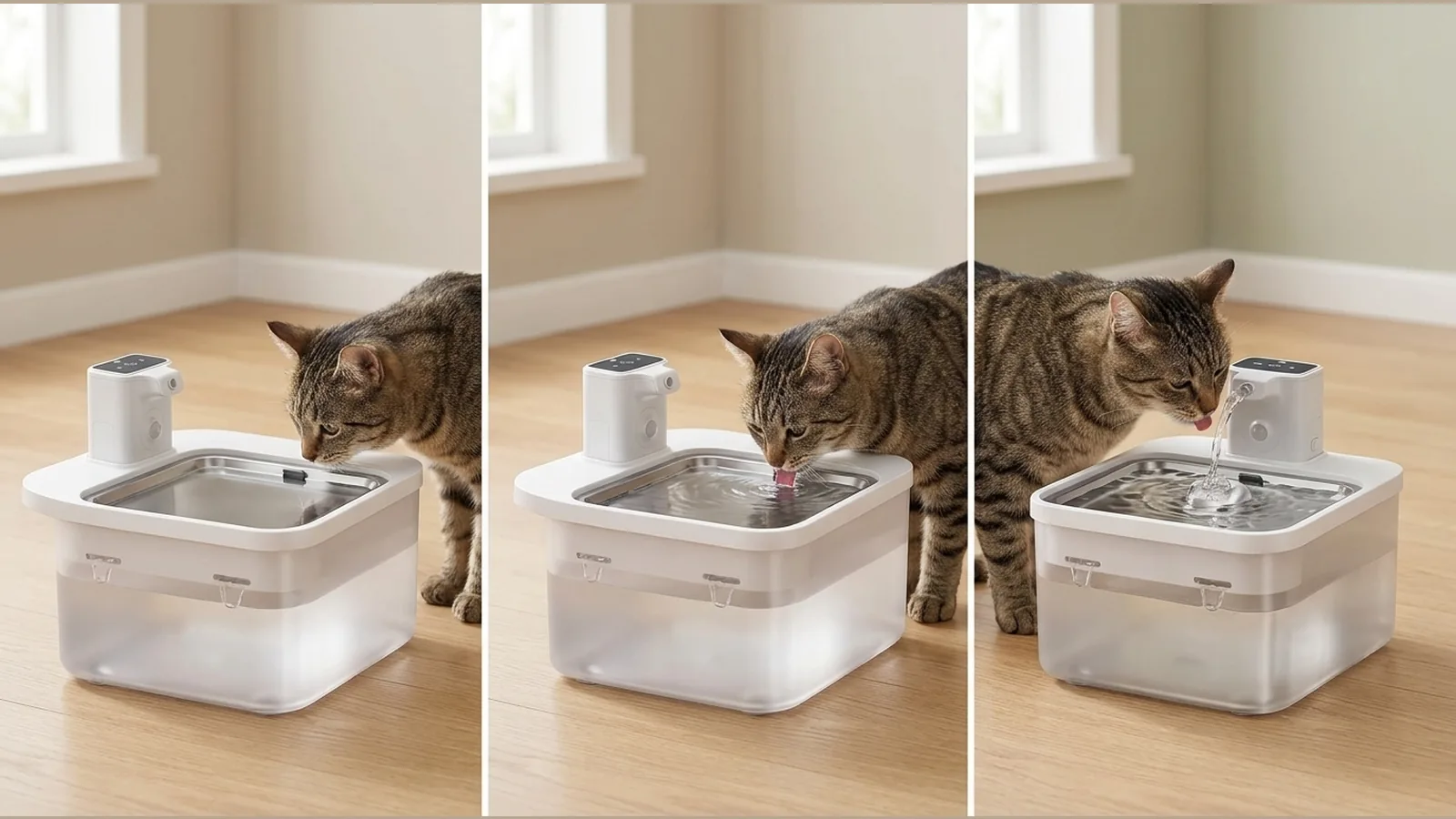
How to introduce a cat to a water fountain gradually
How to introduce a cat to a water fountain gradually is a calm, staged process: leave familiar bowls in place, let your cat investigate the switched-off fountain, add still water next, then start the motor only when they seem comfortable, while you watch for stress and keep backup water available.
Do not remove familiar water
Keep your cat’s usual bowls where they already drink. Sudden change is a common reason a cat scared of new water fountain equipment will avoid the area. Cats Protection advises several fresh water sources, kept apart from food and litter, and notes that some cats prefer running water. Treat the fountain as an extra option, not a replacement, until drinking habits look settled.
Place the fountain in a quiet, easy-to-reach spot. International Cat Care recommends accessible water locations and gradual changes rather than an abrupt switch.
Stage one: fountain off and empty
These cat fountain introduction steps start with the unit switched off and empty. Let your cat sniff, walk around, and claim the space without sound or moving water. A rubber mat under the base can reduce vibration noise later, which helps some cats settle near the unit.
Do not rush this stage. Curiosity without pressure is the goal.
Stage two: add water
When the empty fountain no longer feels novel or alarming, add clean water and leave the motor off. Your cat can meet still water in the new vessel before facing flow. Keep the familiar bowls filled and unchanged.
Offer the new source calmly. Avoid hovering, forcing their face toward the water, or removing the old bowls to “make” them try it.
Stage three: turn on the motor
Only when your cat drinks from, or at least calmly approaches, the still water should you switch the fountain on. Start it when the room is quiet and you can watch from a short distance. If they startle, turn it off and return to stage two for another day or two.
This pace is how you help cat accept moving water without linking the fountain to fear. Reintroduce the motor in short sessions if needed.
Watch stress and preference
Look for flattened ears, wide eyes, rapid retreat, or lasting avoidance of the room. Those signs mean you should slow down or pause the motor again. Preference can be subtle: some cats drink more from bowls, some from flow, and many use both.
International Cat Care’s carer guidance supports gradual fountain introduction, regular cleaning and filter checks, and at least one bowl per cat plus one extra. Clean when water looks cloudy, debris appears, or the flow seems reduced, rather than following an unverified fixed schedule.
Keep backup water sources
Even after your cat uses the fountain, keep multiple fresh bowls available and separate from food and litter. Backup sources protect against pump downtime, cleaning days, or a cat that simply prefers a quiet dish on a given day.
Next step
When you are ready to choose a fountain for a gradual set-up at home, see the current product details. The listing is covered by a 12-month warranty; check the product page for the latest offer information.
When to ask the vet
Contact your veterinary team if drinking suddenly increases or decreases, if your cat stops drinking, or if you see lethargy, vomiting, or other worrying signs. Changes in thirst can need professional assessment. This guide is about calm introduction only, not a treatment plan for health problems.