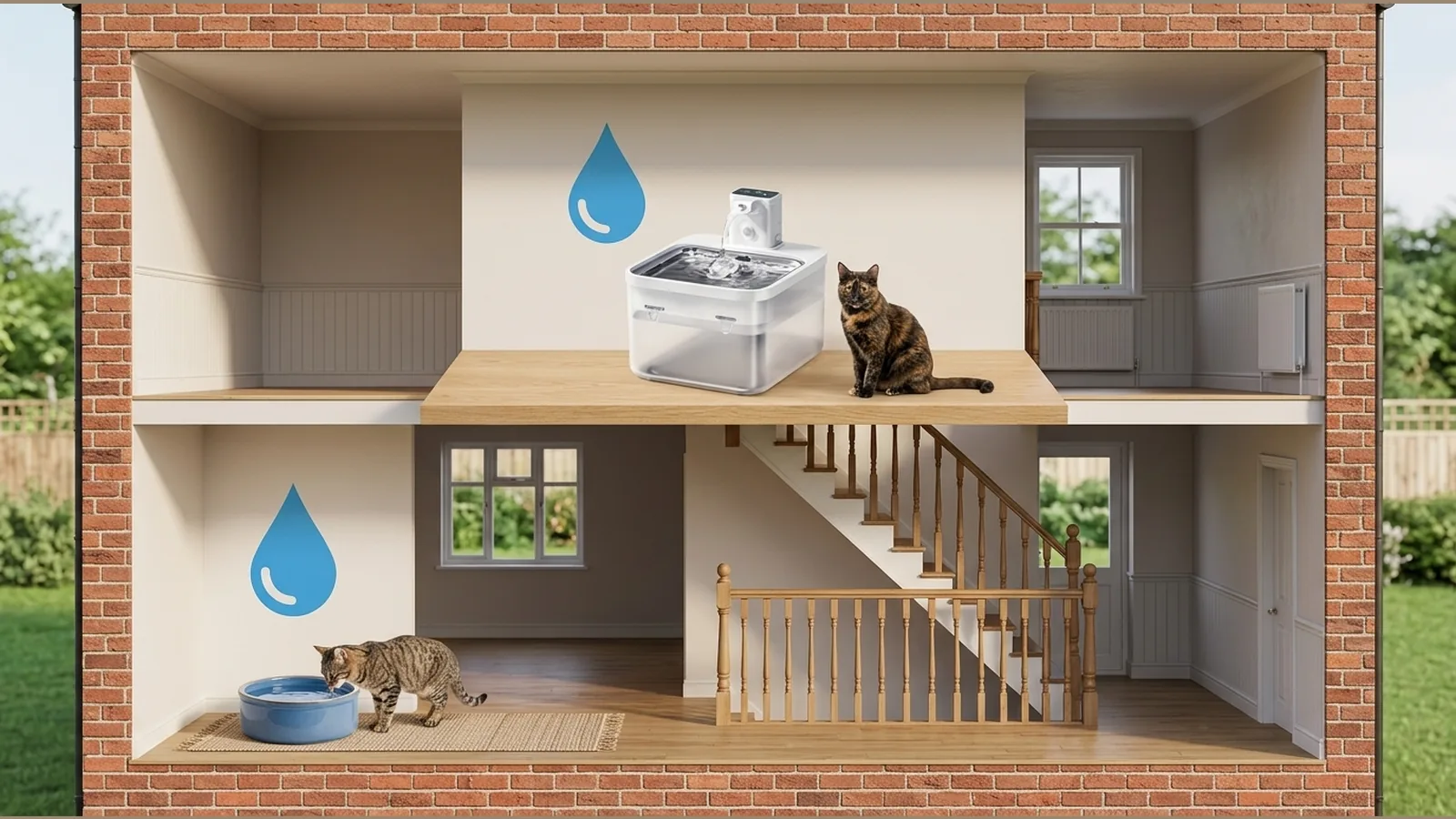
Does a Cat Need a Cat Fountain on Every Floor of the House?
Direct answer
A cat fountain on every floor of the house is a practical way to keep fresh water easy to reach in a multi-storey home, especially when you also keep bowls available and place sources away from food and litter. You do not need a fountain on every level if quiet, accessible water is already close wherever your cat spends time; the aim is short travel distance and steady refresh, not a fixed gadget count.
Accessibility and travel distance
Cats are more likely to drink when water is easy to find in the rooms and levels they actually use. International Cat Care’s advice on encouraging cats to drink stresses quiet, accessible locations and gradual changes to drinking set-ups. In a multi-storey home, that often means a water station on each floor your cat regularly visits, so they are not crossing the whole house for a sip.
One source per cat plus one
International Cat Care’s cat carer guide on increasing water intake recommends at least one bowl per cat, plus one extra. Spread those sources across floors rather than clustering them in one kitchen corner. Cats Protection’s guidance on cats and drinking also advises multiple fresh water sources, kept separate from food and litter trays.
Quiet placement on each floor
Choose calm spots your cat can approach without feeling crowded. The same International Cat Care guide suggests a rubber mat under a fountain to lessen vibration noise, and gradual introduction so the sound of moving water is not startling. Keep stations out of busy doorways and away from litter areas on every floor you use.
Fountain versus bowl mix
Some cats prefer still water in a bowl; others prefer running water. Cats Protection notes that some cats favour moving water, which is why a fountain can sit alongside ordinary bowls rather than replace them. A sensible multi-storey mix is a fountain on the floors where your cat lounges most, plus bowls elsewhere so preferences and access both stay covered. Introduce any fountain slowly and keep familiar bowls in place while they adjust.
Observe use and refresh routinely
Watch which stations empty and which are ignored, then move or add sources to match real habits. Clean bowls and fountains regularly, check filters when water looks cloudy or flow slows, and refresh water often enough that it stays inviting—follow a condition-based clean-and-check routine rather than a schedule you have not verified for a particular model. Wipe spills and keep the area dry so cats are willing to return.
Next step
If you are setting up a quieter drinking point on another floor, you can review the current product details for a cat water fountain option. The listing is covered by a 12-month warranty; check the product page for the latest details before you decide.
Vet signposting
Changes in thirst, urine output, appetite or energy can matter. International Cat Care advises contacting a veterinary team when drinking changes are concerning. Do not treat a new fountain or extra bowls as a substitute for professional advice if you are worried about your cat’s health.